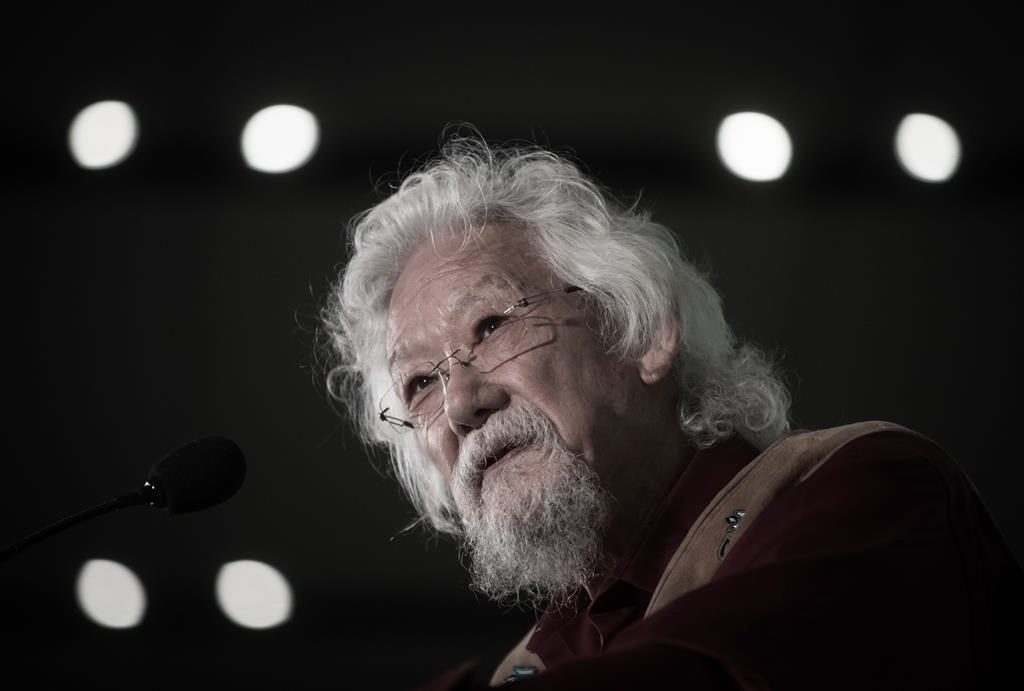
Few public figures in Canada have sparked as much debate on environmental issues as David Suzuki. For decades, he has been a prominent voice calling attention to climate change, biodiversity loss, and the long-term risks of fossil fuel dependency. His views, however, remain deeply polarizing—especially when it comes to oil and gas.
At the center of the controversy lies a fundamental question: Can Canada move away from oil without undermining its economy, or is such a transition essential for the country’s survival?
A Call for Structural Change
Suzuki has consistently argued that incremental adjustments are no longer sufficient. From his perspective, continuing to invest heavily in fossil fuels delays the inevitable transition and increases environmental and economic risks. He advocates for a systematic shift toward renewable energy sources such as wind, solar, and hydro, paired with reduced consumption and changes in how societies define growth.
Supporters see this stance as science-based and forward-looking. They argue that climate instability, extreme weather events, and ecosystem collapse will ultimately cost far more than an early transition away from oil. In this view, preparing now is not ideological—it is pragmatic.
Economic Anxiety and Public Pushback
Critics, however, raise serious concerns. Canada’s oil and gas sector employs hundreds of thousands of people and contributes significantly to national and provincial revenues. For many communities, particularly in western provinces, oil is not an abstract policy issue—it is a livelihood.
From this angle, Suzuki’s rhetoric is sometimes framed as disconnected from economic realities or dismissive of workers whose jobs depend on the energy sector. Opponents argue that a rapid move away from oil could trigger unemployment, regional inequality, and social instability if not managed carefully.
A Symbol of a Larger Conflict
What makes Suzuki such a lightning rod is not only his message, but what he represents. He has become a symbol of a broader cultural and political divide:
-
short-term economic security versus long-term environmental risk
-
technological optimism versus limits to growth
-
reform from within the system versus structural transformation
Public debates, artistic performances, and media commentary have increasingly framed these tensions in dramatic terms, sometimes portraying Suzuki as if he were “on trial” in the court of public opinion. These portrayals are symbolic rather than literal, but they highlight how emotionally charged the issue has become.
Beyond Personalities
Ultimately, focusing solely on Suzuki risks missing the bigger picture. The real issue is not whether one environmentalist is right or wrong, but how Canada—and other resource-dependent countries—can navigate an energy transition that is both environmentally responsible and socially just.
This requires more than slogans. It demands long-term planning, worker retraining, regional investment, and honest conversations about consumption, expectations, and trade-offs.
Conclusion
David Suzuki’s influence lies less in providing easy answers and more in forcing uncomfortable questions into the mainstream. Whether one agrees with him or not, his role in shaping Canada’s environmental discourse is undeniable.
The debate over oil, climate, and economic identity will continue—with or without him. What matters now is whether that debate leads to thoughtful policy and collective action, or remains locked in polarization.