Home Author
Author

Hugo Harrison

Advertisement

In September 2025, Tennis Canada announced that the Davis Cup World Group I tie between Canada and Israel would proceed without spectators in Halifax, Nova Scotia. The decision followed heightened security concerns and public debate, reflecting the challenges of hosting international sporting events in a politically sensitive climate. While the matches themselves are set to continue, the absence of fans has altered the atmosphere and underscored the complex interplay between sport, politics, and safety.

The decision came after national authorities, local officials, and event organizers assessed potential risks to players, staff, and the public. While security measures had been planned, the assessment concluded that the safest approach was to hold the matches in a closed setting. Ticket holders were notified, and refunds were issued. Organizers emphasized that the integrity of the competition would be preserved, even if the experience was dramatically different from a typical live event.

This scenario is unusual for the Davis Cup, an international competition known for its passionate crowds and lively atmospheres. Matches are often defined as much by fan energy as by athletic skill. Without spectators, players must adapt to a quieter, more focused environment. Some athletes may thrive in this setting, while others accustomed to crowd support may face additional psychological challenges. Coaches and sports psychologists are working to prepare teams for these unique circumstances.


Pages: 1 2 3

Advertisement

In 2025, Canada experienced a dramatic shift in its international student admissions, with reports indicating that approximately 80 percent of Indian student visa applications were denied. This unprecedented rate of refusal sent shockwaves through universities, students, and educational consultants across the globe. The policy shift represents a major turning point in Canada’s approach to international education, raising questions about the country’s immigration priorities, institutional strategies, and global reputation.

For decades, Canada has been a preferred destination for international students, offering high-quality education, opportunities for work experience, and a pathway to permanent residency. Indian students have historically constituted one of the largest groups pursuing higher education in Canada. However, the recent surge in visa rejections has disrupted these patterns and created uncertainty for both students and universities.

The consequences of the policy are multifaceted. Canadian institutions, which rely on international tuition fees to support research, infrastructure, and academic programs, face declining enrollments and financial strain. Students who planned to study in Canada must now consider alternative countries such as Germany, Australia, and the United States. Germany, in particular, has emerged as a prominent destination, offering competitive programs, lower tuition costs, and a welcoming environment for international students.

Pages: 1 2 3

Advertisement

In recent years, Canada has witnessed a remarkable cultural renaissance among its Indigenous communities, driven in large part by music. First Nations musicians are playing a pivotal role in revitalizing traditional powwow music while also integrating contemporary elements that appeal to younger generations. This movement represents not just artistic innovation but also a powerful tool for healing, cultural preservation, and community cohesion.

Powwows have historically served as ceremonial gatherings where communities celebrate traditions, dance, and music. However, generations of colonization, residential schools, and cultural suppression disrupted these practices. In response, Indigenous artists have undertaken the mission of reclaiming their cultural heritage. Festivals and gatherings now serve as spaces where language, dance, and song converge to educate, inspire, and connect community members across generations.

Pages: 1 2 3

Advertisement

In September 2025, the global mining industry witnessed one of the most significant corporate developments in recent history: the merger of Anglo American and Canada’s Teck Resources. This decision created a new mining titan with assets valued at more than fifty billion dollars and immediately placed Canada at the center of global discussions about critical minerals, energy transition, and strategic resources. For Canada, which has long positioned itself as a reliable supplier of natural resources, the deal marked both an economic triumph and a geopolitical advantage.

The merger is particularly important because of its focus on copper. Copper has become one of the most sought-after materials of the twenty-first century, fueling everything from electric vehicles and renewable power grids to advanced computing and artificial intelligence. Demand is skyrocketing while supply struggles to keep up, making copper one of the defining commodities of the global energy transition. By joining forces, Anglo American and Teck Resources established a company capable of becoming the world’s leading copper supplier, with strong mines in Canada, Chile, and other resource-rich regions.

Pages: 1 2 3 4

Advertisement

Canadian politics in the 21st century is shaped by a series of complex, interrelated challenges: climate change, immigration, and the rise of populism. Each reflects broader global trends but also takes on uniquely Canadian dimensions.

Climate change is perhaps the most pressing issue. Canada’s vast geography, northern ecosystems, and reliance on natural resources make it especially vulnerable. Melting Arctic ice, wildfires, and shifting weather patterns are no longer abstract threats but lived realities. Federal and provincial governments have struggled to balance environmental commitments with economic interests, particularly in energy-producing provinces. Carbon pricing, pipeline debates, and renewable energy investments dominate political discourse.

Pages: 1 2 3

Advertisement

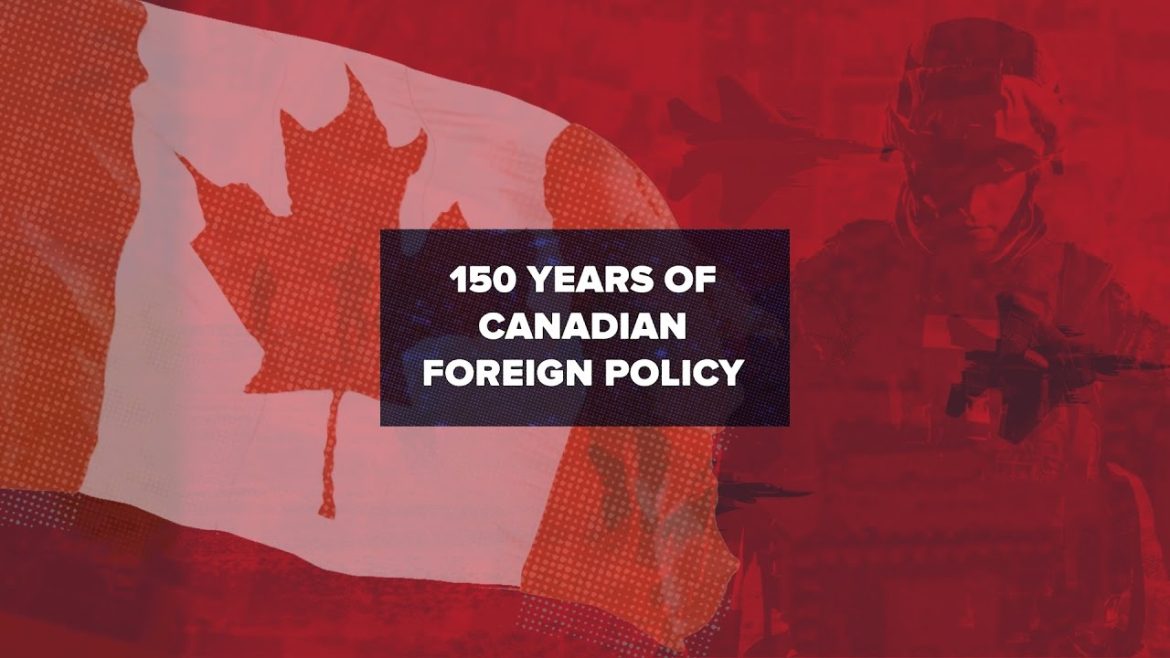
Canadian foreign policy is often described as a blend of pragmatism, multilateralism, and commitment to liberal values. Canada’s role on the global stage has evolved from a loyal partner of Britain, to a middle power closely tied to the United States, to a country seeking influence through diplomacy, peacekeeping, and soft power.

The 21st century has presented new challenges. Canada’s proximity and economic integration with the United States mean that bilateral relations dominate foreign policy. Trade agreements such as NAFTA and its successor, CUSMA, illustrate this dependence. At the same time, disagreements over issues like defense spending, tariffs, and climate policy demonstrate the complexity of the relationship.

Pages: 1 2 3

Advertisement

The relationship between Indigenous peoples and Canadian politics is one of the most significant and complex issues facing the country. Indigenous nations predate Confederation by thousands of years, with distinct cultures, languages, and systems of governance. Yet, colonialism and state policies sought to assimilate or marginalize them.

The Indian Act of 1876 epitomized this colonial approach, imposing federal control over Indigenous communities and undermining traditional governance. Residential schools, operating for more than a century, inflicted generational trauma by separating children from families and erasing cultural identity. These policies have left deep social, economic, and political scars.

Pages: 1 2 3

Advertisement

Federalism lies at the heart of Canadian politics. The decision to create a federal state in 1867 was a pragmatic response to the country’s size, diversity, and political divisions. Provinces wanted to preserve control over local affairs, while the central government sought national unity and defense. The result was a Constitution that divided powers between two levels of government, each sovereign in its own sphere.

Under the Constitution Act of 1867, Ottawa was given authority over national matters such as defense, trade, currency, and criminal law, while provinces retained jurisdiction over education, health care, and local governance. Over time, this division of powers has been contested and reinterpreted through constitutional amendments, judicial rulings, and political negotiations.

Pages: 1 2 3

Advertisement

Canadian politics has been shaped by centuries of negotiation, compromise, and gradual institutional development. Unlike many countries that were born through revolution, Canada’s political system emerged through evolutionary change within the British Empire. The roots of Canadian governance date back to the French colonial era, when New France was administered under centralized rule. After the British conquest of 1763, Canada’s political destiny shifted toward parliamentary traditions and constitutional monarchy.

The British North America Act of 1867 marked the confederation of Ontario, Quebec, New Brunswick, and Nova Scotia into the Dominion of Canada. This event was not merely a legal union but a profound political compromise between French and English-speaking populations, between federal and provincial powers, and between local autonomy and centralized authority. From this foundation emerged a federal system designed to balance diverse interests across vast geography.

Pages: 1 2 3

Advertisement

Older Posts
logo (17)

Contact information

Bocefertti Ltd.

144 Rue Wellington N, Sherbrooke, QC J1H 5C6, Canada

+18195367729
info@bocefertti.com

Disclaimer

This site is not intended to be diagnostic. Results may vary. This information is not a direct recommendation and should not be construed as such. They are not a substitute for a personal consultation or examination by an authorized professional. Consult a professional before starting a new diet or taking supplements. The information provided should be used as a recommendation for an ongoing lifestyle and is not a substitute for a varied and balanced diet.